

KingofWood
Alocasia macrorrhizos 'Borneo Giant' – Corm, Rhizome & Young Plant
Alocasia macrorrhizos 'Borneo Giant' – Corm, Rhizome & Young Plant
Couldn't load pickup availability
Buy Alocasia macrorrhizos 'Borneo Giant' – Corm, Rhizome & Young Plant
Alocasia macrorrhizos 'Borneo Giant' – also searched as Giant Elephant Ear – is an exceptionally large-growing Alocasia with a powerful stem and enormous leaves that become distinctly ruffled with age. Under very good conditions, 'Borneo Giant' can reach around 4–4.5 m. The original specimen from a private collection had already reached about 3 m in height – with no sign that its growth had finished. Due to its enormous space requirements, the plant was divided and propagated vegetatively.
The offered corms, stem/rhizome sections and young plants grown from them come directly from this plant material.
Available options
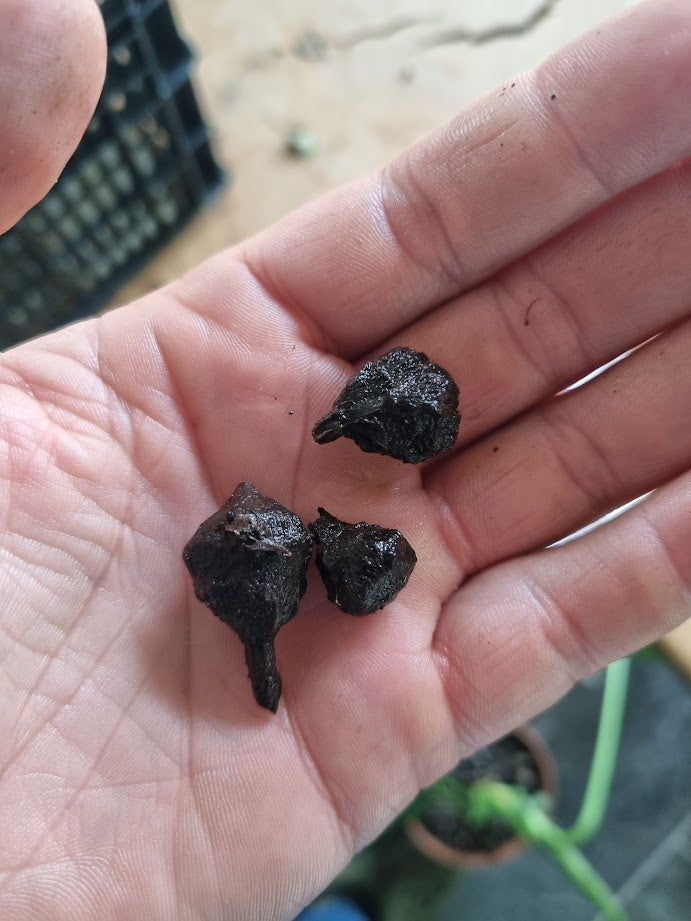
- Corm – dormant / unsprouted, alive: living dormant corm with no visible shoot.
- Corm – already sprouted / active: living corm with visible active growth.
- Stem/rhizome section – min. 1 bud: substantial living section with at least one visible viable growth bud.
- Young plant from corm – pre-order
- Young plant from stem/rhizome section – pre-order
⚠ YOUNG PLANT PRE-ORDER – EXPECTED SHIPPING IN APPROX. 2–3 MONTHS: This applies to young plants grown from corms as well as from stem/rhizome sections. Shipping takes place only once the plant is strongly developed and has at least 2 leaves. Because these are living plants, actual development time may vary slightly.
Photo & material guide
- Image 9: freshly cut stem/rhizome sections from the mother plant.
- Image 10: living corms that are already sprouted or visibly active.
- Image 11: living dormant / unsprouted corms.
Cut surfaces, surface drying & storage
Freshly cut stem/rhizome sections initially have a pale, succulent and moist cut surface. During short storage, the surface may become drier, firmer, beige to light brown or slightly corky. This is normal surface drying and wound response and is not the same as the entire living section drying out.
After injury, the plant changes the tissue around the wound. Cells at and below the cut surface initially lose some surface moisture, while wound-sealing processes begin, including deposition of sealing compounds such as suberin and lignin. The surface can therefore become firmer and darker. This reaction limits further water loss and creates a drier wound surface, which can be advantageous during storage and transport.
Depending on condition, a stem/rhizome section may be shipped with an already dried wound surface or may be cleanly recut before dispatch. If appropriate, the cut surface may also be lightly dusted with clean wood ash. The ash is used as a dry surface dressing; it is not sterilisation and may change the colour and appearance of the cut surface.
For viability, the key signs are not a permanently fresh-wet cut surface, but firm, healthy tissue and at least one viable bud. Soft, mushy or unpleasantly rotten-smelling tissue would not be considered normal surface drying.
What makes 'Borneo Giant' special
'Borneo Giant' has enormous growth potential, strong petioles and very large leaves that become distinctly ruffled at maturity. The divided mother plant clearly demonstrates this potential: a massive stem, substantial rhizome sections and exceptionally large leaves.
The actual source material
The product photos document the mother plant as well as leaves, stem cross-sections, stem/rhizome pieces, buds, corms and roots from the actual source material. Many of the sections are exceptionally substantial and contain considerably more plant tissue than small standard corms.
Rooting & sprouting
For reliable growth, keep warm, bright and evenly slightly moist. Avoid waterlogging. Stem/rhizome pieces are selected with at least one visible bud. Corms can take different amounts of time to show visible growth depending on temperature, season and individual developmental stage. Because this is living plant material, shape, size, colour and sprouting time can naturally vary.
Growing conditions
Warm, bright to partially shaded, nutrient-rich and well supplied with water during active growth. Not frost hardy; in Germany and similar climates it must be overwintered frost-free.
Botanical name: Alocasia macrorrhizos 'Borneo Giant'
Additional search terms: Borneo Giant Alocasia, Alocasia macrorrhiza Borneo Giant, Giant Elephant Ear, giant elephant ear plant, Alocasia corm, Alocasia tuber, Alocasia rhizome, Alocasia stem section, rare aroid.
Not intended for consumption.
📦 Shipping available
🏡 Collection available
Share